
College of Science

Have you ever wondered how the world was formed? How the earth, planets and the billions of stars that light up the night sky were molded? Dr. Sean Brittain, assistant professor of physics and astronomy, is head of the Creative Inquiry Characterization of Planet Formation and he and his team are working to answer these very questions. Brittain’s team is working together to collect information from already available resources and to create their own models to figure out how the earth and other planets were developed.
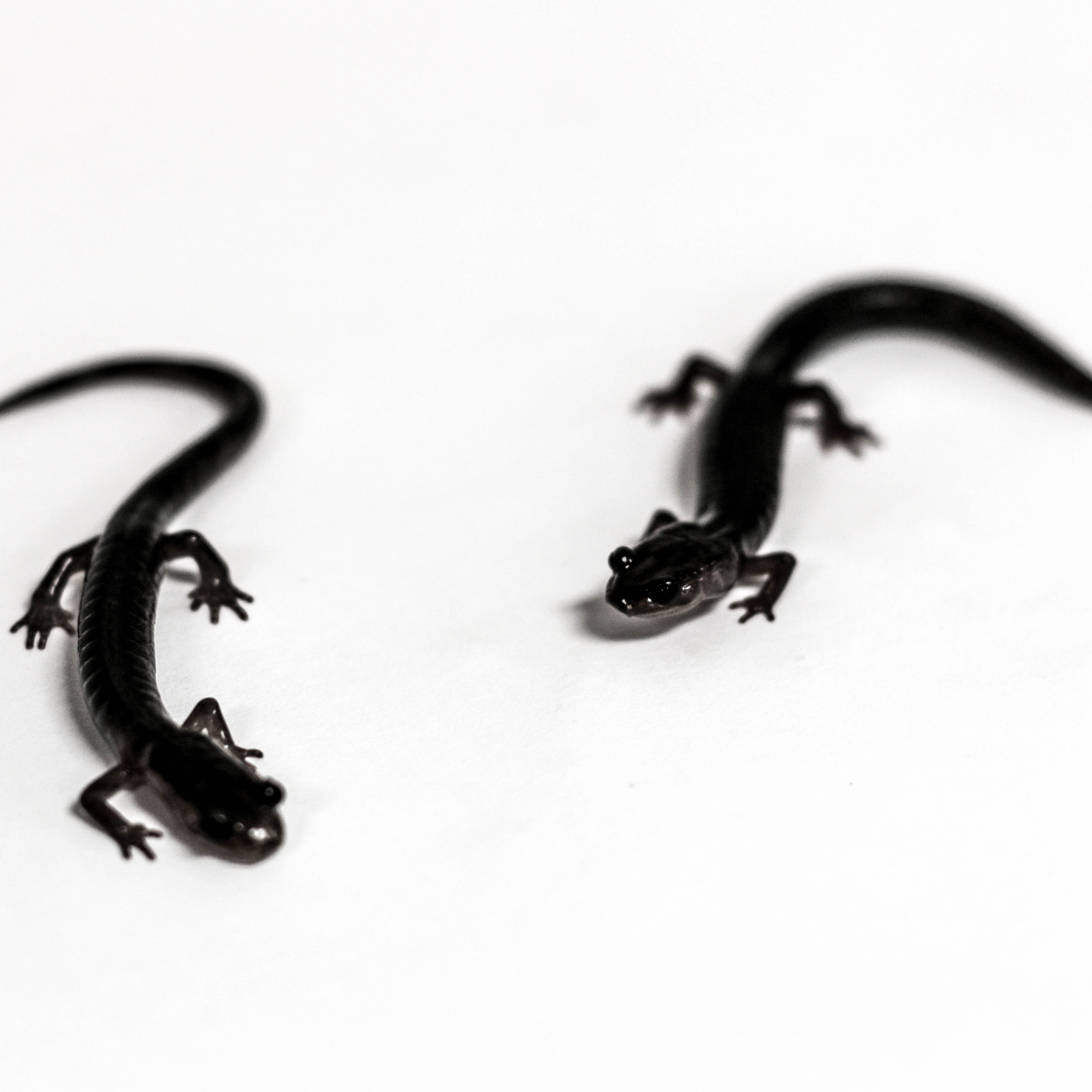
There is a greater abundance of lungless salamanders, also known as Plethodon, than any other vertebrate group in the southeastern United States. Thus this group has a major impact on the ecosystem. Because salamanders are nocturnal, they are seldom seen, but these ecologically important creatures are being threatened due to stressors in their environments.
The human gastrointestinal tract may not be a frequent topic of everyday conversation, but it sure is a conversation worth having as it is home to symbiotic bacteria that assist in digestion.
What happens when you breed purebred dogs? Sometimes the outcome is excellent, but some may be afflicted with one of the more than 600 hereditary diseases that affect dogs. In order to inform breeders about the chances each litter has of inheriting different diseases, genetic counselors must explain complicated genetic equations to dog breeders.
The Creative Inquiry, Genetic Counseling for Dog Breeding, was designed to bridge the gap between the field of genetics and dog breeders. Two Clemson researchers, Dr. Alison Starr-Moss and Dr. Leigh Anne Clark in the Department of Genetics and Biochemistry, have studied canine genetics for fifteen years and spend a lot of time talking to dog breeders.
“When you talk to the dog breeders you realize that the majority of them don’t have a strong grasp on genetics. The breeders are sometimes surprised at what they get when they breed the dogs, so we spend a lot of time explaining how certain genetics works,” Clark said.
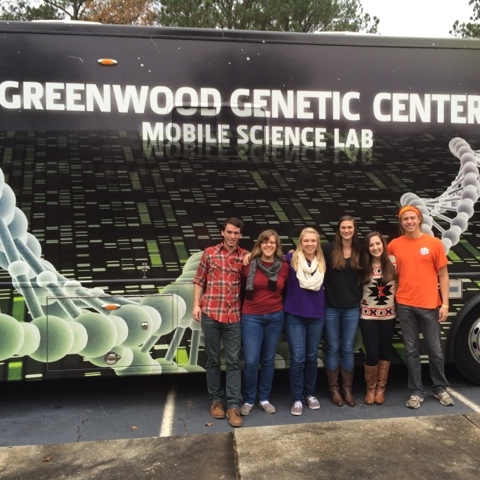
The Creative Inquiry project originated with a plan to develop a brochure that clarified the common misconceptions that dog breeders have about genetics. The brochure would help the genetic counselors explain certain concepts using illustrations and Punnett-squares as visual aids. Starr-Moss and the students met with genetic counselor Lori Bassett at the Greenwood Genetics Center to learn how to communicate successfully with dog breeders. Bassett heads the Center’s Communications office and helped the students explain complex genetic equations without the use of medical jargon.
“I have learned about the public and how much they know about genetics. This CI has taught me how to speak to others about genetics in a way that they will understand without having had any genetic education,” Erin Peterson, ajunior genetics major, said.
In order to write the brochure, the students travel to events to interact with breeders and research what they know about genetics. Teaching genetic concepts without the genetics language is, according to Clark, “a lot like the game Taboo, where you have to get the person to say a word without using certain words.”
The students conducted a short survey at the Fall Tailgate for the College of Agriculture, Forestry and Life Sciences and collected data for their brochure by giving attendees “puppy chow” snacks in return for answering basic genetic questions. They also interviewed breeders at a show sponsored by The Atlanta Golden Retriever Club Agility Trial at Clemson’s Garrison Arena.
“The students learned that some breeders don’t want to address genetics, but some breeders are extremely interested about what the students have to say and have questions for them,” Clark said.
Sophomore Genetics major Alex Davis observed, “I’ve learned a lot about the various diseases that breeds of dogs are susceptible to and how very little breeders understand these diseases.”
The students plan to set up a website where visitors may anonymously log in and ask genetics questions. The website would explain concepts in more depth than the brochure.
The students believe that this website will be more effective than the brochure and interviews since some breeders are reluctant to ask questions about genetics and breeding at shows. Next year, Starr-Moss and Clark hope to give their CI students more opportunities to travel and get hands on experience with dog breeders at shows and events.
“One of the problems that we faced in the beginning was when we realized students didn’t know dog breeds,” Clark said. “You can’t send a genetic counselor over to a dog breeder, and have them ask, ‘What kind of dog is that?’ Then you have lost credibility with the dog breeders.”
Clark believes the Creative Inquiry will inform breeders about genetic concepts and give breeders and students the tools for successful communication.
“A lot of what we do is rewarding when we get a chance to talk to breeders, when they actually start to understand what you are trying to explain and you can see that something has just clicked,” Clark said. Once they understand the basic concepts, breeders can see that this is just simple genetics.
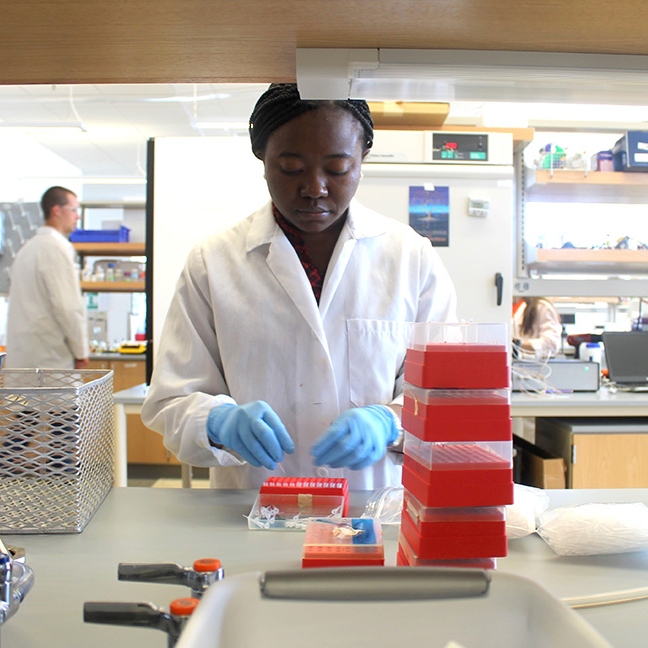
When someone first thinks about bacteria and fungi, they don’t often consider them as resources to produce fuels from things such as plants. Dr. Michael Henson in the Department of Biological Sciences and his Creative Inquiry students are conducting research in order to one day build bio-refineries that can produce fuel from bacteria and fungi. These refineries employ a series of chemical and physical reactions to convert plant material to produce various products, including fuels. Biofuels are fuels that originate from living organisms.
“We would want to do that as a bio-refinery by taking those biological products, bringing those biological products into a bio-refinery, and converting those biological products of biomass into a variety of end-products that have value as a fuel or other sectors of the economy,” Henson said.
Henson began this project when he was in graduate school by converting biomass materials into methane, a component of natural gas. Years later, Henson put together a Creative Inquiry, called Biofuels to Biomass, that involves undergraduate and graduate students working on a project that combines basic and applied science. Students in this CI learn more about their chosen field through first-hand experiences and research opportunities. Henson knows that this experience is valuable.
“It is no longer just studying a textbook or copying a lab procedure,” he said. “The student begins to build on these methods and goes into a lab and can see their project and do the work and see their own results.”
The students are now studying the roles of specific bacteria and fungi in the conversion of biomass
materials, such as cellulose, into biofuels.
“One part of this research project is to optimize the conditions in the way we mix bacteria, which include temperature, different pH and different nutrient requirements,” Abhiney Jain, a microbioogy graduate student, said. “The second part of this project is to understand the relationship between bacteria and fungi as they deconstruct these plant polymers.”
One of the biggest things sophomore biological sciences major Tabitha Banks has gained from the project is the ability to problem-solve.
“I’ve gotten a new outlook on problem solving. When something goes wrong, you don’t necessarily know why it has gone wrong, so it’s looking at here’s what we did, here are the options we can do and it really makes you think,” Banks said. “You may not know what’s going wrong, so it requires you to think outside the box, which will definitely be helpful in future endeavors.”
Banks also reiterated the benefits of working in a lab outside of her regular lab classes.
“I really enjoyed being able to work in a lab because it gives you an insight into many things that you don’t get to do in labs for classes,” she said. “When you go into labs for classes, it’s generally all laid out for you there, step by step, but in here you have the large scale goal for the lab and for the project, but then it’s left up to you.”
Overall, Henson is pleased with the progress made by his students and the time they spend in the lab, learning valuable skills that will inevitably help them further down the road in their careers.
“It is seeing the undergraduate student who has little to no experience in the lab have that discovery moment when they see something they’re discovered for the first time,” Henson said.
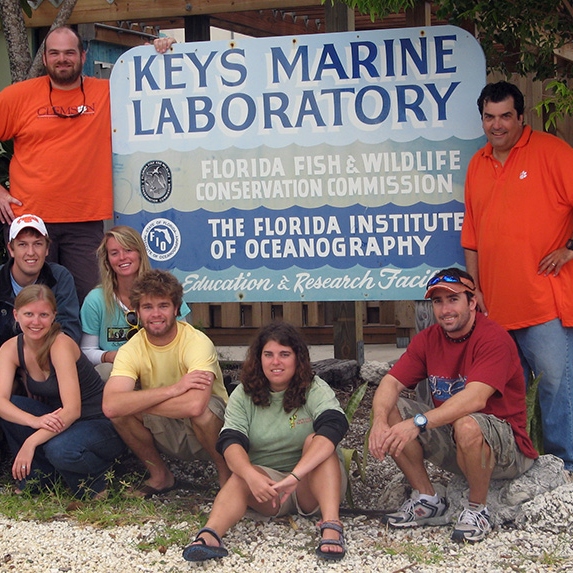
Dr. Michael Childress received the 2015 Phil and Mary Bradley Award for Creative inquiry Mentoring at the may 7 general Faculty meeting.
Dr. Childress, an associate professor in biological sciences, has hosted a Creative Inquiry team since the early days of the program, serving as mentor to 44 undergraduates and involving his graduate students as additional mentors to the younger students. His project was featured in the inaugural issue of Decipher magazine, in 2012, in the article, Don’t be Crabby: Creative Inquiry Students are Making a Splash.
Michael’s students are exceedingly productive — they have made 21 presentations at professional conferences, have produced at least one publication (with a graduate student in the lab), and describe their work on an ongoing basis through their blog.
His students respect and like him, in great part because he obviously cares about them. A student made the following comment, in nominating Dr. Childress for this award:
Dr. Childress is a brilliant teacher and communicator and really cares about the success of his students. I spend a good part of every week in the lab, even when I’m not working specifically on data analysis for the project. I credit this largely to the camaraderie among the students and mentors on the CI team. Dr. Childress is always willing to help us with our projects but he also challenges us to think for ourselves and figure out problems without being told the answer. Research with Dr. Childress has really changed my Clemson experience. It’s opened my eyes to real world issues and allowed me to cultivate skills I couldn’t have gained in a regular classroom setting.
In recent years, fruits like the acai berry and pomegranate (coined ‘superfruits’) have been wildly heralded for their numerous health benefits. But what role do such fruits actually play in increasing the human lifespan? Groundbreaking research is being conducted by biological sciences professor Dr. Yuqing Dong, microbiology and molecular medicine professor Dr. Min Cao, and their Creative Inquiry team. They are helping determine whether various natural extracts affect the body’s aging and how they do so. In the process, the group has come upon some startling evidence that points to a link between stress resistance and lifespan.
The team first began its studies on a fruit regarded by many as one of the healthiest, the cranberry. This berry is known to protect the body from oxidative stress; that is, the generation of compounds created through our metabolism that are hazardous to our DNA and protein molecules. Could cranberry extract also have anti-aging implications? The team investigates how this and other high potential natural extracts could have life extending effects. Along with the cranberry, the Creative Inquiry team is looking at noni, a Hawaiian fruit that contains even more antioxidants than cranberries, and royal bee jelly, a substance fabled for its anti-aging effects.
Although the research team’s goal is human application, for now Dr. Dong and his students are studying Caenorhabditis elegans or the nematode worm. The short lifespan of the nematode, only two to three weeks, makes it the ideal organism for aging studies. The worm’s genome may only be 40 percent similar to the human genome, but 60-70 percent of its genes are expressed the same as in humans, making it an applicable model for most situations. For example, even Alzheimer’s disease has been studied in the nematode worm.
Nematodes obtain the nutrients of the extracts in a way any other worm would: they simply eat them! One of the three natural extracts is incorporated into the nutrient-rich substance that the nematodes live. The worms then consume this extract-ingrained media for six days, from hatchling to young adult. The researchers record their overall lifespan and compare differences.
Break out the turkey and cranberry sauce because the results are promising. The cranberry extract increased the average worm lifespan by about 40 percent and royal jelly increased lifespan by roughly 25 percent. The noni fruit extract study remains incomplete, although it seems to have similar effects.
Perhaps the most astonishing part of the results is that the increase in longevity was correlated with an augmented ability to resist a stressor. The cranberry extract not only increased lifespan, but it increased heat shock resistance as well. The worm normally lives at 25°C, but if exposed to temperatures 35°C or more, its heat shock resistance mechanism kicks in. This protection comes from proteins that help the body adjust to the consequences of high temperatures. Normally, nematodes can only live a half-hour in such warm conditions, but after being treated with cranberry extract, the nematodes could stand the heat for nearly twice that time. Initial results suggest that the natural extracts are also involved in the protection from various stressors, such as UV radiation and extreme cold, indicating that the secret to a long life may be due to a strong defense against stressors.
In 2012, the project has expanded its horizons. Dr. Dong puts it, “Humans do not follow the same habits throughout their whole lives. Young people don’t care what they eat, but when they get older, they start consuming healthy foods. We want to see if we can replicate that in our experiment.” The team is analyzing the effect the extracts have when given to the nematodes at different points of their lives. “Does it increase their lifespan more when the extract is given to them the last week of their lives or the first week?” This new part of the study aims to identify at what point in life such extracts have the strongest effect.
Along the way, the team is discovering new things about these special extracts. Cranberry extract not only has anti-aging implications, but the Creative Inquiry team has shown that it also has anti-microbial properties. It appears to slow the growth of some pathogens, such as salmonella.
It is not clear if all ‘superfruit’ or antioxidant-rich foods augment longevity, but Dr. Yuqing Dong and his Creative Inquiry team have provided substantial evidence demonstrating that at least some increase lifespan by supporting stress resistance. Who needs one of those expensive wrinkle-fighting creams when you can drink a glass of ice-cold cranberry juice?
What if you learned we only had 30 years left of oil reserves and less than 80 years worth of Uranium? Obviously you would want to find an alternative, especially using resources you already have. Dr. Terry Walker, Robert Clark, Charles Thornton, and their Creative Inquiry team have begun to seek such a product to offset these diminishing fuel sources. The team is developing a system to reuse vegetable oil to create biodiesel, but they’re investigating other methods to produce energy and cut down on waste. With unpredictable gas prices, most would welcome alternative fuels with open arms.
The oil from the grease trap at your local McDonald’s may not seem valuable, but the team is transforming it into ready-to-go fuel. Their Mobile Biodiesel Production Lab (MBPL) converts and purifies vegetable oil into biodiesel and glycerin. Dr. Walker, from the Department of Environmental Engineering and Earth Sciences, uses a lab that runs on 100% biodiesel and is completely off the grid. Clemson’s campus produces 5,000 gallons of waste vegetable oil annually, and since the team’s process produces a gallon of biodiesel for every gallon of vegetable oil, that’s 5,000 gallons of gas made every year from waste! This biodiesel is currently being used in campus vehicles like trucks, tractors, garbage vehicles, and perhaps even buses in the near future. The MBPL creates 20% of the fuel campus vehicles use, and the team’s goal is to reach 10,000 gallons, or 50% of Clemson’s diesel needs, by the end of 2012.
Since the summer of 2011, the Creative Inquiry team has approached local businesses and restaurants, including favorites like Brioso and Croc’s, as sources for used vegetable oil.
This green energy and biodiesel project has several associated Creative Inquiry projects seeking to increase sustainability and reduce waste. The “Biosystems Engineering: Creating Value Added Co-products from Biofuel Waste Products” looks for uses of glycerin, a byproduct of biodiesel purification. This semester the team is focusing on cleaning products like soap or detergent. About 20 gallons of glycerin is generated every week from Clemson’s biodiesel production. This past fall the research team has experimented with different mixtures for bars of soap. Initial attempts included adding pumice or seed hulls as an abrasive. The latest iteration uses a mixture of the glycerin and white clay, resembling a hardened piece of cornbread. Research associate and biodiesel guru David Thornton says their goal is to make it less crumbly and add an appealing fragrance – for the moment, the soap smells like cooking oil. To deal with the large quantities of glycerol generated, though, the team is trying to figure out how to make a liquid detergent that can be used in Clemson’s dining halls for everyday mopping. This creates a useful product made from their own cooking oil, and could save on cleaning material costs.
This Creative Inquiry team still has more ideas cooking up in their frying pan. Dr. Walker and students are also looking into algae to produce fuel. The growing algae feed off the CO2 generated by the engine that purifies the oil, making the biodiesel purification process even more environmentally friendly. The team will then process the algae into oil, which will go on to become even more biodiesel. Algae are also a high quality source of protein that can be used for animal feed. Another idea that the team would like to explore is feeding biodiesel waste products to black soldier fly larvae. “They harvest themselves,” Thornton explains, as the larvae will eventually become pupae that can be rendered back into biodiesel production or as protein pellets for livestock feed. A square foot of fly larvae will consume three pounds of food waste. When it’s time to pupate, the larvae are trained to move through channels and fall into a bucket. The pupae can be processed to produce both oil and a protein meal that can be used in composting and as feed.
This Creative Inquiry team is the driving force behind Reduce, Reuse, Recycle. They bring biodiesel to Clemson University’s utility vehicles with little to no harm to the environment. Thomas Green Clemson would be proud.
Learn more about their work at: clemsonbiofuels.wordpress.com or on facebook.

There are only 3,200 wild tigers left in the world. The enormity of this problem has not gone unnoticed by Clemson students. In 1997, Clemson students founded Tigers for Tigers, a student initiative to support tiger conservation around the world. As Tigers for Tigers president Sean Carnell explains, “There are over fifty schools out there with tiger mascots. Here at Clemson, we know how much pride these mascots make us feel for our school. So we decided to work with other schools to extend the pride from the football field to help real tigers in the wild.”
Initially, Tigers for Tigers aimed to create a national coalition and host the first national summit to promote collegiate awareness about the situation. The student group was able to gain the support of President Barker, who sent letters to other tiger mascot schools to enlist support for the cause. Collaborating with the 57 other tiger mascot universities was not an easy task. Tigers for Tigers advisor, Dr. David Tonkyn, and a group of dedicated students formed a Creative Inquiry team. After two years of hard work, the team made the dream of a national coalition become a reality, as the National Tigers for Tigers Coalition was formed. This united effort allows students across the country to work together through social media, advocacy programs and involvement abroad to help protect tigers. In April 2013, the team hosted a National Tigers for Tigers Summit. The purpose of the Summit was to establish a foundation for the national organization, develop a strategic plan for students helping tigers and promote student awareness of the issues associated with tiger conservation.
The 2013 conference was an enormous success. Featured speakers included Dr. Ron Tilson, a world premiere tiger biologist, Dr. John Fitzgerald, the senior policy director for the Society for Conservation Biology, representatives from the International Fund for Animal Welfare and many others. While sparking awareness and admiration in students interested in tiger conservation, visiting tiger experts also helped the Creative Inquiry team establish Tigers for Tigers as a national organization. Carnell explains, “we built wonderful connections with our partners. Especially at the conference, we worked with wonderful people who knew exactly what needed to happen to make a change. They showed us how national policies are developed. It was way more exciting than reading a textbook.”
Beyond the conference, Tigers for Tigers is working to improve its social media outreach program through developing a Facebook page and filming viral videos to spread awareness. And the Creative Inquiry group aims to promote the Big Cats and Public Safety Protection Act, a federal bill banning the private ownership of big cats in the United States. Also, for the past nine years, Tonkyn and former Director of International Student Services Louis Bregger have offered an opportunity for students to visit India to see tigers in the wild and learn about their conservation. Such opportunities are important for the success of the coalition, Carnell notes, because “that’s where all the motivation started for us. We went to India, saw tigers in the wild, and came back excited to help.” The incredibly diverse number of projects Tigers for Tigers encompasses makes this Creative Inquiry project applicable to students with all sorts of interests including finance, marketing and biological sciences.
As Tigers for Tigers continues to grow and develop, the group hopes to expand on a national level. But as 11 schools are now united across the country, working tirelessly to help real tigers around the world, Tigers for Tigers has successfully made solid steps to saving Clemson’s beloved mascot: the Bengal tiger.
Creative Inquiry – CI Tiger conservation #480